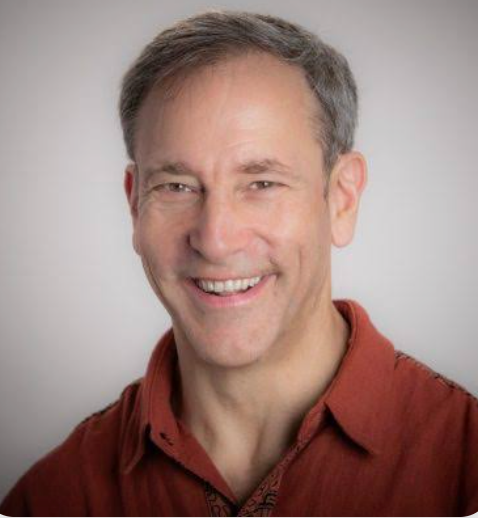
By Amy Frost
•
October 14, 2026
When people hear the words humanitarian work, they may imagine traveling across the world to respond to a war, natural disaster, or humanitarian crisis. That work matters enormously. But over many years of working with veterans, military families, first responders, community leaders, and the ACEP Humanitarian Committee, I have learned something equally important: You do not have to travel across the world to change the world. You can begin with the community right in front of you. I grew up in a military family. I was born on an Air Force base. My uncle, a Navy pilot, died in a plane crash when I was very young. Years later, my husband Tom died during Desert Storm, and the life I thought I had mapped out suddenly disappeared. At the time, I had a successful career with the Department of Defense. I had an MBA. I knew how to organize, manage, execute, and get things done. Grief didn't particularly care. Eventually, my own search for healing led me to earn a master's degree in spiritual psychology. Over time, what began as my own journey became a calling to serve veterans and their families—and, increasingly, the many people who spend their lives serving others. Build Community Before the Crisis One of the most important lessons I have learned about humanitarian work is surprisingly simple: Don't just run in to help. Build relationships first. Years ago, through ACEP's humanitarian work, Suzanne Connolly, Dr. Kristin Miller, and I became involved in developing what evolved into a Veteran-to-Veteran project in Las Vegas. We didn't simply arrive with a program and tell veterans what we thought they needed. We reached out to people already trusted within the veteran community—leaders connected with the VA, Nevada veterans' services, veteran groups, and other community organizations. We listened. We built relationships and earned their buy-in. Then we introduced tools from Thought Field Therapy and energy psychology that they could use themselves and share within the circles where they already had trust. My job was not to become the center of the system. My job was to help strengthen the system that was already there. Our final formal training took place in April 2017. Six months later, on October 1, Las Vegas experienced a devastating mass shooting. Suddenly, the relationships we had spent years cultivating mattered in ways none of us could have anticipated. I didn't have to figure out how to reach an entire traumatized city. The network already existed. I could reach the leaders I knew, support them, and help them support their own communities. Build community before the crisis. When something happens, you won't be starting from zero. The Ripples Create More Ripples Today, I continue working with veterans and their families throughout Las Vegas. I support the Rebel Vets community at UNLV when they need me, and I facilitate a monthly gathering at the City of North Las Vegas Veterans & Community Resource Center. We deliberately call it Women's Fun Day . Why? Because if we called it Suicide Prevention, a lot of people who need connection might never walk through the door. Women veterans come, but so do spouses, adult children, caregivers, and community supporters. We talk. We laugh. We practice something simple—a breathing technique, tapping, another self-regulation tool. Sometimes I support them. Sometimes they support me. And then something wonderful happens: people take what they learn and carry it somewhere else. One veteran I've known for years is now in pastry school and mentoring younger people there. She is sharing some of the practices she has learned with the young people she encounters. Others have created simple “walk and talk” gatherings in local parks or brought self-care practices into coffee shops and community groups. This is how humanitarian work grows: the ripples create more ripples. It doesn't always require a large grant, a formal program, or an airplane ticket. Sometimes it begins with a walk. Sometimes with coffee. Sometimes with one person asking another person, How are you, really? Hope Providers Need Hope, Too There is another part of humanitarian work that I believe we need to talk about much more openly. I call it providing hope for the hope providers . The people who spend their lives helping others—clinicians, first responders, veterans, caregivers, nonprofit leaders, teachers, humanitarians—can become extraordinarily good at appearing fine. They are often the people everyone else depends upon. That can make it very difficult for them to say, I need help. I think about suicide prevention through that wider lens. Long before someone reaches the most visible point of crisis, something may be disappearing mentally, emotionally, or spiritually. Someone may continue running an organization, caring for a family, or serving a community while quietly running out of resources themselves. I know something about this personally. After my husband died, there were moments when I did not want to be here. I had to find my own way through that terrain. Years later, during the aftermath of the Las Vegas shooting, my own grief resurfaced. I had spent years learning about self-care and teaching it to other people. But I discovered another layer underneath all my competence and activity. I needed to learn how to receive care, too. If we want people to remain in the work for the long haul, we have to support the people doing the supporting. Why ACEP Matters to Me This is one reason ACEP has become so important in my life. ACEP gives me community. It gives me people with whom I can have conversations I don't get to have anywhere else. It gives me trusted resources and colleagues who understand this work from the inside. Through ACEP's Humanitarian Committee and our conferences, I have met people who became dear friends—and then became collaborators in doing good in the world. We support one another. We challenge one another. We remind one another to practice the very things we teach. And ACEP's humanitarian work has never been only about what one committee accomplishes. Its real power lies in what happens when someone gets an idea, finds a few kindred spirits, learns useful tools, and takes them home. One person mentors another. One project becomes another. One community develops its own capacity to respond. Eventually, we don't even know where all the ripples have traveled. That is a good thing. Start Where You Are So what would I say to someone who feels called to humanitarian work but doesn't know where to begin? Start where you are. Find something you genuinely care about. Find the people already doing the work and listen to them. Learn a few practices that can help people regulate stress and reconnect with themselves and one another. Make those practices simple and accessible. Find collaborators. Take care of yourself while you are doing it. And then give other people permission to take what works and make it their own. You do not have to do everything. You are not supposed to. Maybe your contribution is traveling to a community in crisis. Maybe it is supporting the people who do. Maybe it is mentoring one young practitioner, gathering veterans for coffee, teaching a breathing technique, checking on a caregiver, or simply believing in someone who has forgotten how to believe in themselves. Make it simple. Make it fun. Do what you're here to do. Then let the ripples travel. Because perhaps that is the deepest lesson humanitarian work has taught me: we are not here to rescue one another. We are here to build communities strong enough that we can care for one another. About the Author Amy Frost, MBA, MA Spiritual Psychology, is an educator, facilitator, trainer, coach, writer, and longtime humanitarian whose work has included veterans, military families, first responders, community servants, and those who support them. A longtime member of ACEP's Humanitarian Committee and ACEP's 2018 Humanitarian of the Year, Amy has spent decades developing community-based approaches to resilience, self-care, peer support, and humanitarian service. Image by qimono from Pixabay