ACEP’s Next Chapter: The Time Has Come Again

David Gruder • November 13, 2026

ACEP has held a very special place in my heart since before it officially existed. As its founding president, I’ve had the privilege of helping midwife an idea that began with a handful of passionate pioneers and grew into an international professional association that has contributed so much to the worldwide acceptance, development, and responsible practice of energy psychology.


That’s why the recent announcement about ACEP’s financial challenges touches me so deeply. I know how much heart, dedication, and hard work have gone into building and sustaining this organization. I’m grateful to everyone who has carried that responsibility over the years, including our current board and executive director, who have been navigating some exceptionally difficult decisions.


I also want to offer a broader perspective on what ACEP is experiencing, because I believe something important is happening here that goes well beyond financial difficulties.


Two Challenges, One Opportunity


First, ACEP is hardly alone. Many professional associations that historically depended on conferences and membership revenue are struggling to adapt to changing expectations and economics. Large hotel-based conferences have become increasingly expensive to produce and attend. Online conferences offer greater accessibility, but they also compete in a world overflowing with educational content and competing demands on people’s attention.


The challenge goes beyond choosing between in-person and online events to discovering what kinds of experiences and ongoing value people are now willing to invest their time, energy, and money in.


But there’s a second challenge that’s just as important: revitalization. Every pioneering organization eventually faces a particular developmental turning point. When its original innovations begin entering the mainstream, the very success it helped create changes the environment in which it operates.


What once made the organization indispensable no longer distinguishes it in quite the same way. At that point, sustaining the organization requires more than managing expenses, preserving programs, and recruiting members. It also requires discovering where the next frontier of meaningful innovation lies and stepping forward to help lead the way.


I believe ACEP has arrived at such a turning point. The opportunity, then, is to discover not only what ACEP can pioneer next, but what distinctive value that pioneering role can provide to members, the profession, and the wider world.


Remembering Why We Came Together


When ACEP was founded, energy psychology was a fragmented collection of pioneers, approaches, and emerging possibilities. We recognized that we could accomplish far more together than separately.


Our rallying cry was simple: “The time has come for the EP world to unite.”


And we did.


ACEP helped build a marvelously collaborative professional community, advance research, establish educational opportunities, encourage responsible practice, and give the field a stronger collective presence.


That was our pioneering mission then.


But pioneering organizations cannot remain pioneers simply by preserving what they pioneered.


Which brings me to a question I’ve been carrying in my heart: What has the time come for now?


A New Horizon for Energy Psychology


I’ve spent much of my professional life helping people and organizations recognize when the approaches that brought them this far are no longer sufficient for the challenges and possibilities ahead.


In recent years, I’ve come to believe that the broader human potential movement is at just such a turning point.


For decades, we’ve developed an extraordinary assortment of approaches for healing psychospiritual wounds, alleviating distress, overcoming limitations, and expanding human possibilities. Energy psychology has made meaningful contributions to that evolution.

Yet something essential has remained underdeveloped: Too much of the human potential field still encourages people to move from one helpful technique, program, or modality to another without a coherent, developmentally sequenced roadmap to effectively and efficiently guide their growth.


Meanwhile, the world our clients are navigating demands capacities that go well beyond symptom relief, trauma healing, and personal improvement. They need greater psychospiritual maturity, resilience, discernment, clarity of purpose, relational competence, and an enhanced ability to contribute constructively amid enormous personal and societal change.


I’ve come to call this next developmental horizon Human Potential 3.0.


It’s the larger vision underlying my SPARC Blueprint™, including the version I’ve developed specifically for Human Potential Professionals. Its premise is that the next era of our field must move beyond helping people heal and improve their lives to also helping them systematically develop the psychospiritual maturity and practical capacities to navigate today’s and tomorrow’s accelerating complexity, fulfill more meaningful purposes, and contribute more constructively to the world around them.


I believe energy psychology has important contributions to make within that macrovision.


And I can easily see ACEP becoming a pioneering leader in helping the broader human potential field bring about its next wave of contributions to humanity.


The Next Chapter Belongs to Today's ACEP


I’m sharing this vision as an ACEP elder, not as a proposal to take the reins of the organization again.


Nearly three decades ago, those of us who founded ACEP recognized an emerging need, gathered people around a shared purpose, contributed our time and resources, and did the work necessary to bring an organization into existence.


Today, that responsibility belongs to ACEP’s current leadership and members.


If ACEP is to activate its next era of pioneering leadership, it will require members, leaders, and funders who are willing to come together around a compelling next-generation vision, refine it through thoughtful dialogue, develop viable strategies, contribute the necessary legwork, and mobilize the financial resources to make it sustainable.


That vision doesn’t have to be precisely the one I’ve outlined here. In fact, I hope it will grow richer through the insights, creativity, and wisdom of the people who now make up ACEP.


What matters is that ACEP reinvigorates around a future compelling enough to motivate members and donors to actively invest themselves in creating it.


Of course, ACEP’s immediate financial and operational challenges must be addressed. The board’s efforts to stabilize our organization deserve vigorous member support. But financial stabilization and renewed pioneering relevance need to proceed together. My perspective is that a sustainable future requires both.


The Time Has Come Again


I would love to see ACEP’s members engage in a genuine conversation about what the energy psychology world now needs to unite around – and how that shared purpose can open ACEP’s next chapter of flourishing.


What emerging human needs are we uniquely positioned to address? What role can energy psychology play in advancing a more coherent and developmentally mature approach to human potential? What educational innovations, collaborations, research priorities, and forms of professional community would make ACEP more relevant and compelling than ever?


These are questions worthy of the pioneering spirit that gave ACEP its beginning – and equally worthy of a renewed pioneering spirit that will give ACEP its future.


As someone who helped bring this organization into the world, nothing would delight me more than seeing today’s ACEP community discover and actualize a compelling NEW answer to the question that originally inspired us into existence:


The time has come once again. For what?


With enduring love for ACEP and everyone who has helped it become what it is,
David Gruder


About the Author

David Gruder, PhD, DCEP, was the founding president of the Association for Comprehensive Energy Psychology (ACEP). A multi-award-winning psychologist, author, educator, and organizational development consultant, he has devoted decades to helping individuals and organizations integrate personal growth, psychological development, leadership, and social responsibility.


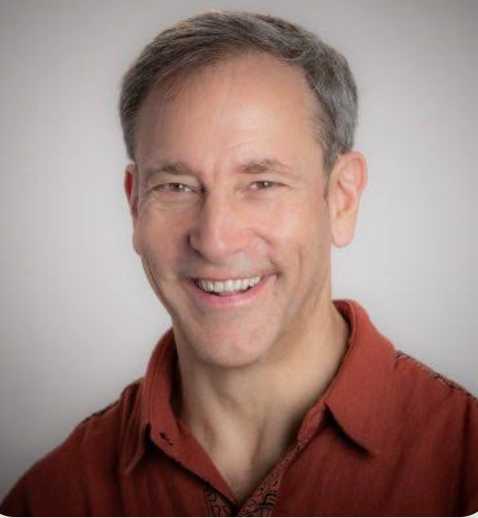
Image by Pexels from Pixabay


By Maria Limardo • November 13, 2026
There is a vision from an Instagram post at 9:00 PM, when I was preparing to wind down for the day. I still remember how all the buildings in La Guaira, Venezuela, collapsed under the double earthquake: that image stayed with me, an entire city wiped out in minutes. My heart sank. The earthquake occurred at 6:04 pm on a holiday, June 24th. The next morning I offered the first of many trainings online. I had trained for many things as a clinician and researcher. I had not trained for the moment when an entire community's nervous system is stuck in alarm, and the people in other parts of the continent are asking, without words, what do we do now? My family of origin is from Venezuela, so I know the conditions of the country are already precarious. No systems in place. Over the past 8 years, I have had the privilege of serving after earthquakes, pandemics, and school shootings. In each place or online, I was not there to treat people one by one. That would never have been enough. I was there to teach, to share the Emotional First Aid (EFA) tools that ACEP's Humanitarian Committee offers through the Resources for Resilience (R4R) website, so that community members could carry them to their own neighbors, families, and colleagues. Why we teach instead of treat The EFA Subcommittee's mission is to alleviate suffering by teaching self-help techniques to people affected by violence, trauma, and natural disasters. It rests on a belief I hold deeply: people are naturally flexible and resilient, and given effective tools, information, and support, they can recover from adversity. When a disaster hits, professional help is scarce, and the need is enormous. But a teacher who learns a simple technique in the morning can share it with a classroom in the afternoon. A neighbor can help a neighbor. That is how the work multiplies. What it looked like on the ground R4R organizes its tools by how a person feels: scared and anxious; frozen, shocked, and exhausted; angry with racing thoughts; confused and clumsy; upset by memories. That simple language matters. In a crisis, nobody wants a clinical term. They want to know: what can I do with this feeling in my body right now? Online, I taught teachers, first responders, mental health workers, volunteers, and family members some of the practices from the "frozen, shocked, exhausted" section, such as the Butterfly Hug, Four Thumps, TTT, and the Thymus Thump. One of the participants recognized their own shock: someone who laughed for the first time in days, someone who asked how to teach it to their children. They recognized what sounds, movements, smells, and images can trigger them. They understood that during the first weeks, the only help they have, and that can give them a sense of control and safety, is going to be these techniques for regulating their nervous system. In Peru / Colombia / Panama, the contrast in preparedness surprised me. The government response was immediate. They already know their countries are in a seismic location, and there were systems in place. They experienced less devastation and were more open to incorporating the techniques more readily, with plans for rapid distribution. Whereas in Venezuela we had to jump through hoops. What struck the participants and me every time was that the tools were not complicated. They were accessible . People could use them without equipment, without a license, and in whatever space we had, whether a school courtyard, a church hall, or online, creating support groups. A note on the work: as the R4R site states, these are educational self-help techniques for stress reduction, not a substitute for medical or mental-health care. We always encourage people to connect with licensed professionals when needed. The part nobody warned me about I will be honest: it was exhausting. There were long days, little sleep, emotional weight, the stories I heard, ongoing workload, and not many Spanish-speaking trainers ready to jump into action. I kept going because the need was real and because the work felt meaningful. But somewhere along the way, I noticed my own signs: fatigue, mood, irritability, numbness, frustration for not being able to be on the ground, trouble sleeping, and feeling flat, non-stop social media watching for updates. I was teaching people how to regulate their nervous systems while quietly ignoring my own. That was my lesson. My fellow humanitarian committee members noticed that I was exhausted and asked me to stop and delegate the training to those I trained who were on the ground. Those who serve cannot pour from an empty vessel. If we ask others to pause, breathe, and return to safety, we have to practice it ourselves before, during, and after we show up for others. Why we need more hands This work cannot rest on a few people. The Humanitarian Committee needs more members, more voices, and more regional connections, especially in Spanish-speaking and Latin American communities where the need is of utmost priority. Start with a Hispanic community here in the United States and allow them to be beacons for their families back home. We have Community Connect, led by Amy Frost, precisely so that those of us who give so much around the world- clients, family have skills and support for our own well-being. Its mission is to share (unload the burdens of being a healer, energy psychologist, group facilitator, etc.), receive support, and teach skills for the well-being of ACEP members who participate and give. I wish I had leaned on that sooner. Here is what I am asking of you: Join the Humanitarian Committee. Whether you can give a few hours a month or train in the field, there is a place for you. Reach out at acephum@gmail.com. Build community relationships before the crisis. Trust takes time. The partnerships we build now, with schools, clinics, faith communities, and local leaders, are what let us respond quickly and respectfully later. Help us reach more people. When we regulate our own nervous systems and teach others to do the same, the effect ripples outward through families and communities. If you have felt the pull to serve but wondered whether you have enough to offer, I will say what I wish someone had said to me: you do not have to carry it alone, and you do not have to do it all. Come as you are, bring your curiosity, and bring your own self-care. I am now with a brighter image of what the future holds for me and others. About the Author Dr. Maria I. Limardo, Ph.D. CEHP , a specialist in Genetics, with extensive experience in clinical studies in the Genetics of the Extracellular Matrix, discovered Collagen 17. She specializes in holistic healing interventions, is a motivator, and a consultant on medical and holistic issues for radio, television, bloggers, books, and written articles for the Hispanic media. She was honored with the "Spreading the Word Award 2021" and has served for 9 years as a member of the humanitarian committee with ACEP. www.marialimardo.com IG @marialimardophd Image by geralt from Pixabay
By Fred Gallo • November 13, 2026
*Fred Gallo Endorsement In an era where the boundary between the physical and digital worlds is rapidly dissolving, Digital Ethics for Energy Healing Practitioners arrives as a vital, high-stakes roadmap for the modern healer. Dawson Church, Anitha Vasudevan, and Kelly Yousem have crafted a masterwork that is as practical as it is visionary. While many ethical guides remain stuck in the "office-visit" mentality, this book leans courageously into the complexities of the 2020s—tackling everything from AI-driven chatbots and virtual reality interventions to the subtle nuances of remote muscle testing. Why This Book is Essential Real-World Application: Through over 50 "Ethical Dilemmas," the authors move beyond dry theory into the messy, real-world scenarios practitioners face today—like managing a client’s suicidal ideation over Zoom or handling a deepfake of one's professional identity. The AI Frontier: This guide provides perhaps the most comprehensive look at how Artificial Intelligence intersects with energy healing, offering crucial guidance on AI note-takers, "chatbot girlfriends," and the risk of automated misdiagnosis. Trauma-Informed & Culturally Aware: It bridges the gap between high-tech delivery and high-touch care, ensuring that privacy, cultural grief rituals, and trauma-informed safety remain at the center of the virtual healing space. Comprehensive Compliance: With included HIPAA checklists and a dedicated Ethics Code for Energy Healing, this is not just a book—it is a foundational professional standard. "A brilliant synthesis of ancient healing wisdom and cutting-edge technology. This is the definitive manual for any practitioner who wants to expand their reach through digital platforms without sacrificing their integrity or their clients' safety." Whether you are a seasoned therapist migrating to a virtual practice or a new coach navigating the world of app-based support, this book is your indispensable companion. It ensures that as our tools become more sophisticated, our ethics remain even more so. About the Author Fred P. Gallo PhD, DCEP, Author of Energy Psychology and The Tapping Toolbox; founder of Advanced Energy Psychology Image by geralt from Pixabay
By Lori Chortkoff Hops • October 14, 2026
December 1961 - September 2026 Personal reflections by Lori Chortkoff Hops, PhD, DCEP, Former ACEP President Shockingly, we lost a great one. Teacher extraordinaire. Multitalented healer. Introspective thinker. Generously hearted. Craig Weiner lived life with gusto, whether vibing with international creative expressions of formal and street art or cherishing exotic cuisine, deftly climbing rocky heights, or sunset kayaking with whales in the sound. Craig was ever curious for the next adventure, delighted with spontaneous encounters with new and familiar souls and animals, sounds and colors. Holding a razor-sharp memory, Craig could easily quote an apt phrase, whether common or obscure, at a moment's notice , highlighting one of his many areas of expertise or fascination. How strange indeed to be left with the echoes of silence his memory traces through our collective grief. Only months before his passing from the physical form, Craig and his beloved wife and partner, Alina Frank , were newly settling into their home in sunny Mexico, far from their home of many years in the lush wetlands of the Pacific Northwest. In true Craig style, he befriended many people right away, while sharing his antics with those at home through his active social media sites. Many relished his detailed narratives with videos from stunning desert, sea, mountain, and waters of the world. Craig greeted people with glee, with his trusted dog Bibi (aka Habibi Bear) in tow. In true Craig fashion, Bibi sometimes was carried and worn like a scarf, riding on the back of Craig's neck. Craig gave unceasingly from his soul for the well-being of all, leaving an immeasurable impact on the field of energy healing. His accomplishments are broad and deep, and can be found listed on his website . In his brief time with us, though he accomplished much, he left many dreams unrealized. It is up to us to find our way to extend what we loved best about Craig, and make it happen with him in mind. Beyond his vast curricula of knowledge and products and classes, I was most touched by Craig's unceasing commitment to excellence, deeply sharing authentically from his heart moments of pain and joy, his snappy sense of humor, and his infectious smile with a hearty laugh asking us to meet his mood with our own joy. Craig's life is honored with two memorial services, in his two homes, with beloved friends and family. And we will all be able to track Craig's eternal spirit when we hear the splash of sea life, see silver light dancing on the water, and feel the warmth of love in laughing eyes, no matter the species. You can learn more about Craig's life story and work in his own words through this podcast interview with me . If you wish to donate to a charity in Craig Weiner's name, his wife Alina Frank has kindly requested choosing Jovenes Adelante . Jóvenes Adelante AC is a Mexican Donataria Autorizada; JA is a 501 (c) (3) non profit. All financial contributions are tax deductible. About the Autor Lori Chortkoff Hops, PhD, DCEP is a licensed psychologist in Westlake Village, California, USA. She is certified in Comprehensive Energy Psychology and Logosynthesis. Lori is a past ACEP president and Reiki master. Learn more about Lori at www.drlorihops.com . Lori teaches online intuition classes and consultation. Check out her podcast Healing Tips from the Heart: Helpers, Healers and Guides.
More Posts