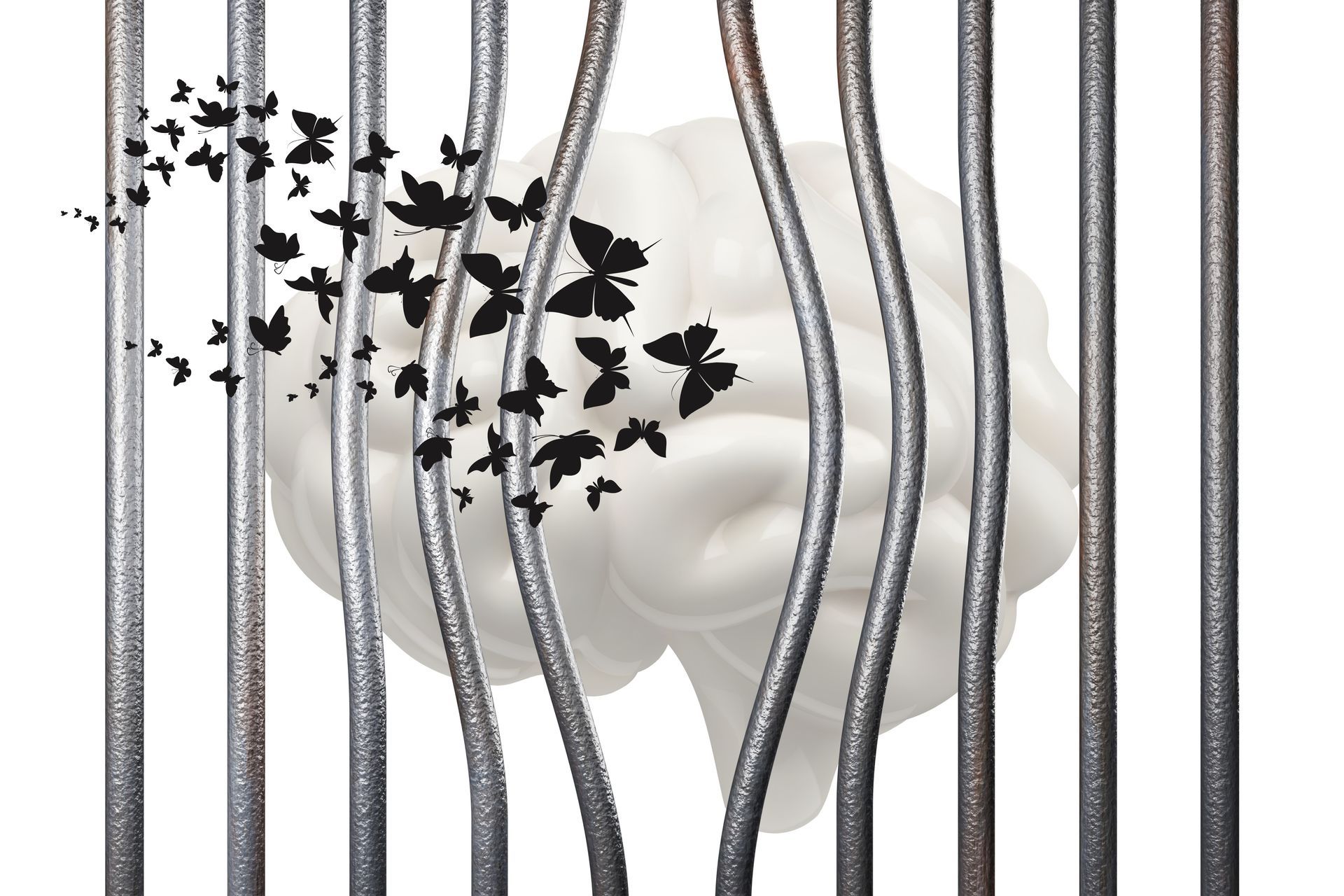
Why Getting Sober Feels Like a War Inside You—How Energy Psychology Can Help
When Sobriety Feels Like an Internal Battle

You’re trying to get sober. But something inside keeps pulling you back toward using—and something else makes sobriety itself feel threatening. This isn’t weakness or lack of motivation. These are learned patterns. And they can be changed.
In my clinical experience, it helps to think of three forces running simultaneously when someone is trying to recover from addiction.
The Force Moving You Toward Sobriety
First, there’s a force toward sobriety. This may be your own desire to stop, or pressure from family, health, work, or the legal system. Either way, something is pushing in the direction of freedom from substance use.
The Pull of Learned Relief: Attractor Forces
At the same time, there are attractor forces pulling you toward using. These are built from your history with the substance. Over time, your mind learned that using it brought relief, calm, confidence, connection, or escape. Those experiences were recorded as emotional memories.
When stress hits, that learning activates automatically. Images, sensations, cravings, or a sense of anticipation arise. Your system remembers what worked before and offers it again. Sometimes thoughts like “just this time” or “this will help” appear. Often it isn’t verbal at all—just a felt pull, a sense that using would make things easier, at least for now. In the moment, this doesn’t feel irrational. It feels practical. Your nervous system is doing exactly what it was trained to do.
The Hidden Resistance: Repellant Forces
And third, running alongside both of those, are repellant forces pushing you away from sobriety—triggered by the very idea of stopping.
When you imagine sobriety, your system may register loss—not as a concept, but as a feeling. Not just the substance itself, but what it represented: relief, protection, belonging, or a way to cope with stress, pain, or loneliness. The fear is often not “I’ll miss using.” It’s “I won’t be able to handle life without it.” “I’ll be overwhelmed.” “I’ll fall apart.” These reactions sometimes rise as thoughts. Other times they’re just felt—as anxiety, heaviness, dread, or a subtle but powerful pushback that makes staying sober feel unsafe or unsustainable.
Why Insight Alone Isn't Enough
Insight into these forces can reduce shame and help you understand why you’re struggling. But it doesn’t turn them off. Knowing what’s happening is not the same as changing it. That’s why people can deeply want sobriety and still feel pulled off course.
None of this means you’re broken or weak. It means your mind is running learned programming—conditioned responses, emotional loops, and trauma-based adaptations that were installed because they helped you cope at some point. They’re just no longer serving you.
And they can be changed.
When Change Requires More Than Willpower
If the attractor and repellant forces remain intact, getting and staying sober requires constant effort. You’re managing urges, fighting internal resistance, and bracing for relapse. Even when you’re doing well, it can feel fragile.
How Energy Psychology Works With These Patterns
Energy Psychology works differently. It doesn’t rely on insight or willpower. It works directly with the patterns themselves.
In my work with people navigating addiction, we get in touch with whatever is drawing them toward use—the urge, the habit, the desire to escape, the fantasy that it will make things better—and use EP techniques to dissolve the emotional charge behind it. When someone focuses on a craving or fear while tapping, the intensity reliably drops, and that drop tends to hold.
EP can also strengthen the forces supporting sobriety. Using approaches like Ask and Receive, for example, it’s possible to remove internal resistance and support identity shifts—so that a person begins to relate to themselves as someone who can naturally live this way, rather than someone who is constantly fighting not to use.
When Sobriety Begins to Feel Natural
When those internal drivers change, sobriety stops feeling like something you have to force and starts feeling like something that fits. A former client reached out recently to say the work had eased his path to recovery at a moment when the stakes couldn’t have been higher. That kind of outcome is what this work is for.
About the Author
Mark Bottinick, LCSW-C, is a licensed psychotherapist in Silver Spring, Maryland, USA. He incorporates many Energy Psychology modalities into his work, including Logosynthesis, Emotional Freedom Techniques, Tapas Acupressure Technique, Blue Diamond Healing, and Ask and Receive. Mark is on the Board of Directors of the Association for Comprehensive Energy Psychology and serves as its Secretary. Learn more about Mark at GetBeyondTalk.com.
✨ Explore more integrative healing approaches and continuing education in Energy Psychology at the
👉Association for Comprehensive Energy Psychology (ACEP).
Image by Larisa-K from Pixabay